
Author:: Benny Barak
Published on:: 17 September, 2025
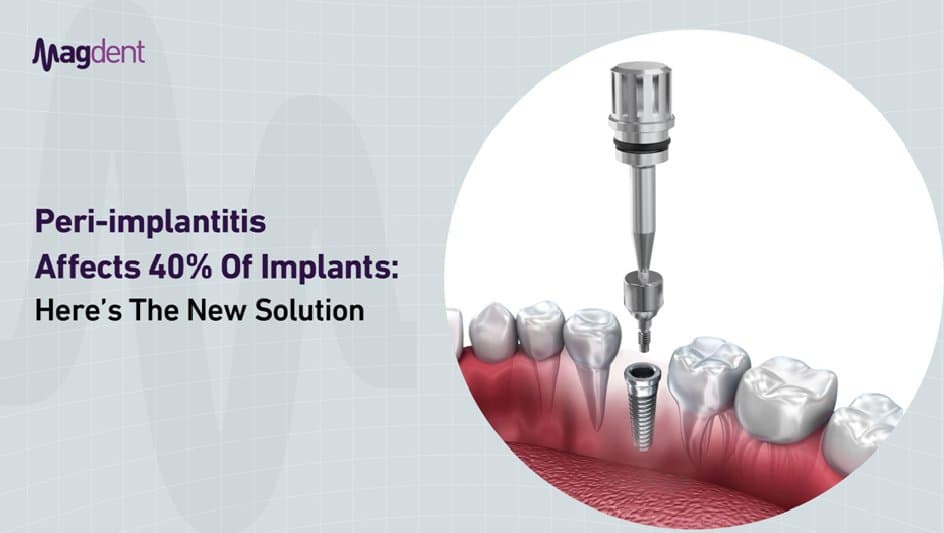
Dental implants have become the gold standard for tooth replacement, offering durability, functionality, and aesthetics. However, alongside their remarkable success comes a growing challenge that affects countless patients worldwide: peri-implantitis.
Studies show that nearly 40% of dental implants develop peri-implantitis over time[1][2]. This condition, characterized by inflammation and progressive bone loss around implants, can threaten their stability and longevity. For patients, it may mean discomfort and worry. For dentists, it can mean complex interventions and the risk of implant failure.
The good news? A new, scientifically validated solution is changing how we approach peri-implantitis, and it comes from Magdent.
Peri-implantitis is an inflammatory process that affects the tissues surrounding a dental implant. It is typically caused by bacterial accumulation at the implant site, leading to bone loss and soft tissue damage[2][3]. Unlike peri-mucositis (a reversible inflammation), peri-implantitis is progressive and, if untreated, may lead to implant failure.
For dentists, it represents one of the toughest challenges in implantology. Despite meticulous surgical techniques and improved implant materials, peri-implantitis continues to surface in clinical practice[2]. Thereby, proving that traditional approaches to healing and prevention are not always enough.
The effects of peri-implantitis ripple through both the practice and the patient’s life. Here’s how:
The scale of the issue, affecting up to 40% of implants, makes it one of the most pressing complications in implant dentistry today [1][2].
Traditional strategies to manage peri-implantitis include improved hygiene protocols, antibiotic therapy, mechanical debridement, and surgical interventions[2]. While these methods can help, they are reactive rather than proactive. They treat peri-implantitis once it has occurred, rather than preventing it during the most critical healing phase.
This raises the question: What if we could influence healing at a biological level, enhancing bone and soft tissue regeneration from the very start?
This is where Magdent steps in. As leaders in bioelectromagnetic healing technology, Magdent has developed the Magdent-MED, a miniaturized electromagnetic healing abutment that actively accelerates dental implant healing while helping prevent complications such as peri-implantitis.
Instead of using a standard, passive healing cap, the Magdent-MED generates a Pulsed Electromagnetic Field (PEMF) for up to 30 days after activation. It is designed to fit seamlessly as a typical healing abutment but adds powerful stimulation that:
For dentists and implant professionals, the impact of Magdent’s solution is profound:
For patients, the benefits are equally clear: less worry, less downtime, and a smoother journey from surgery to a confident smile.
Peri-implantitis may affect 40% of implants today, but it doesn’t have to define the future of implant dentistry[1][2]. By addressing the biological foundation of healing, Magdent’s technology offers a proactive, science-backed solution that benefits both clinicians and patients.
With innovations like Magdent’s PEMF healing abutment, dentistry is moving toward a future where prevention is built into the very design of implantology. Instead of waiting for complications to arise, clinicians can actively create conditions that minimize risk and maximize success.
With faster healing, stronger integration, and reduced risk of complications, Magdent is paving the way toward safer, more predictable implant outcomes.
Learn more about how Magdent is transforming implantology and explore the research behind this breakthrough today.
Sources:
Subscribe to our newsletter to stay up to date on Magdent’s latest developments and news.
Let us know how we can support. We're here to provide support and answers to your clinical or technical questions.


