
Author:: Benny Barak
Published on:: 10 October, 2025
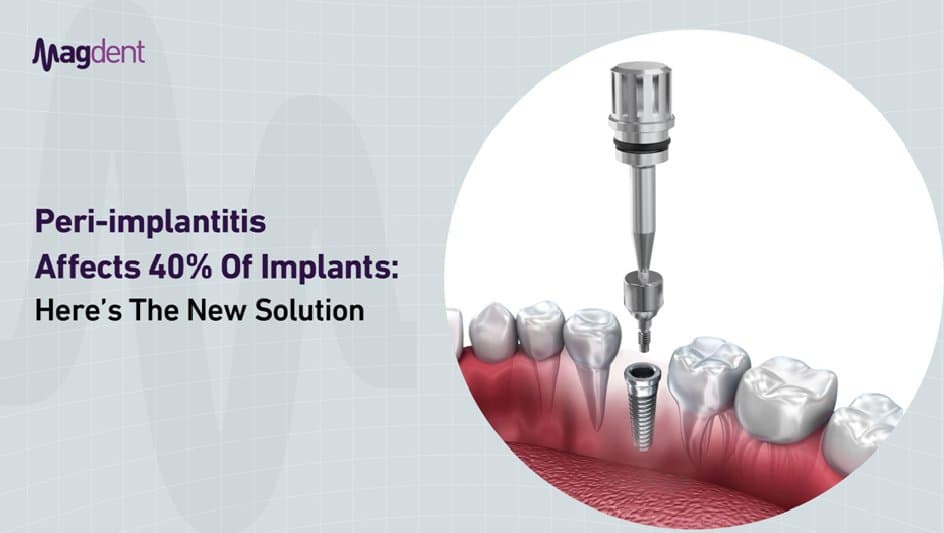
Dental implants have transformed restorative dentistry, giving patients reliable and long-lasting solutions for missing teeth. But even the most expertly placed implant relies on how well the surrounding bone heals and integrates. That’s where Pulsed Electromagnetic Field (PEMF) therapy comes in. It’s a non-invasive approach that can enhance bone regeneration, improve implant stability, and support long-term peri-implant health.
If you’re a dentist looking to improve outcomes and patient satisfaction, understanding PEMF, and how it can be applied in implant procedures is increasingly important.
You might wonder, what exactly is PEMF? In simple terms, it uses low-frequency electromagnetic fields to stimulate the body’s natural healing processes. Think of it as giving your cells a gentle nudge to communicate better, repair faster, and respond more effectively to stress or inflammation.
In implant dentistry, PEMF has several key benefits:
Magdent’s Miniaturized Electromagnetic Device (MED) brings this technology into practical use. This small device attaches directly to the implant site and delivers continuous PEMF therapy without discomfort, allowing patients to go about their daily routines while their implants heal optimally.
One of the biggest factors in implant success is how quickly the implant bonds with the bone. PEMF therapy has been shown to accelerate this process significantly.
Clinical studies report that implants treated with PEMF reached higher implant stability quotient (ISQ) values within 30 days. This makes earlier loading protocols possible without compromising long-term outcomes [1].
Even in challenging areas, like the maxilla or posterior regions where bone density may be lower, PEMF-treated implants demonstrated improved secondary stability [2]. In practice, this means your implants settle in faster, giving both you and your patients more confidence in the treatment.
Not all implant cases are straightforward. Elderly patients, post-extraction sockets, or low-density bone sites can present challenges. This is another area where PEMF shines.
Preclinical studies have shown denser peri-implant bone and higher bone-to-implant contact in PEMF-treated implants compared to untreated controls [3]. In simpler terms, even implants in compromised sites can achieve predictable outcomes.
Devices like MED are especially useful in low-density bone areas, enhancing early stability and improving the overall success rate of your procedures [2]. With PEMF, challenging cases become more manageable and predictable.
Bacterial colonization around implants can lead to peri-implantitis and, ultimately, implant failure. While traditional approaches rely on antibiotics or chemical rinses, PEMF offers a non-invasive alternative.
In vitro studies have shown that PEMF reduces key pathogens such as P. gingivalis and T. forsythia [4]. Animal models also demonstrate that PEMF can shift the oral microbiome toward a healthier balance , lowering inflammation-associated bacteria and reducing the risk of peri-implantitis [ 5].
With its triple mechanism of action; antimicrobial, anti-inflammatory, and osteogenic, PEMF supports tissue regeneration while reducing dependency on chemical interventions. This approach not only protects the implant but also contributes to overall oral health.
Inflammation can hinder bone healing around implants. PEMF has demonstrated the ability to modulate immune responses, reduce osteoclast activity, and promote bone formation even in these conditions [6].
Additionally, PEMF stimulates mesenchymal stem cells to proliferate and express osteogenic markers, supporting procedures such as guided bone regeneration (GBR) and sinus augmentation [7]. Clinical trials have also reported improvements in bone levels and peri-implant health without antibiotics or surgery [8]. Long-term follow-ups confirm sustained reductions in probing depth, bleeding on probing, and bone loss over 12–24 months [10].
In short, PEMF is both preventive and therapeutic, helping implants thrive even in inflamed or high-risk environments.
Why PEMF Matters in Implant Dentistry
PEMF therapy is more than just a technological advancement, it’s a practical, evidence-based tool for improving implant outcomes. Its benefits are clear:
By integrating PEMF into your practice, you can shorten healing times, increase success rates, and provide predictable, high-quality care. Patients benefit from faster recovery, healthier implants, and reduced need for antibiotics or invasive interventions.
Adopting PEMF is a way to combine innovation with patient-centered care, ensuring that implants not only succeed but thrive over the long term. For dentists committed to excellence, understanding and using PEMF is no longer optional, it’s becoming an essential component of advanced implant dentistry.
Sources
1] J Craniofac Surg. 2019 Jun;30(4):1055–1057. doi:10.1097/SCS.0000000000004763
[2] Materials (Basel). 2020 Apr;13(7):1667. doi:10.3390/ma13071667
[3] Clin Oral Implants Res. 2016 Aug;27(8):935–942. doi:10.1111/clr.12661
[4] Biofouling. 2020;36(8):923–934. doi:10.1080/08927014.2020.1825694
[5] npj Biofilms Microbiomes. 2025;11:36. https://doi.org/10.1038/s41522-025-00667-0
[6] Int J Nanomedicine. 2024;19:8695–8707. doi:10.2147/IJN.S470901
[7] Sci Rep. 2018;8:5108. https://doi.org/10.1038/s41598-018-23499-9
[8] BioEM. 2023;44:144–155. doi:10.1002/bem.22481
[9] Poster Presentation, EuroPerio11. 2025. Long-Term Effects of Focused PEMF Therapy on Peri-Implantitis: A Multicenter Trial
[10] Periodontology 2000. 2025;00:1–22. doi:10.1111/prd.12638
Subscribe to our newsletter to stay up to date on Magdent’s latest developments and news.
Let us know how we can support. We're here to provide support and answers to your clinical or technical questions.


